Workshop Coffee packaging
Workshop Coffee is a UK-based specialty coffee retailer with a direct-to-consumer model, emphasizing quality, sustainability, and ethically sourced products. Their packaging strategy utilizes modern, minimalistic visuals and eco-conscious materials to reinforce brand values and enhance the consumer experience.
Packaging Portfolio
Workshop Coffee employs a dual-format packaging portfolio, leveraging flexible stand-up pouches for coffee beans and grounds, and precision-folded carton boxes for capsules and multipacks. Materials are chosen for their barrier properties, ensuring freshness and aroma retention, while matte finishes and minimalistic color palettes reinforce a premium brand image. Notably, the company integrates home-compostable solutions for capsules and prioritizes recyclability across formats, aligning with sustainability goals. The structural design focuses on shelf impact, easy handling, and resealability, optimizing both logistics and consumer usability.

The packaging is a tall, rectangular box with a smooth, flat construction. It features clean edges and precise folds, indicative of a folding carton. The exterior is predominantly white with a matte finish, giving it a modern and minimalistic appearance. The front displays the brand name 'WORKSHOP COFFEE' prominently at the top, along with the product name 'ARTICLE' in a smaller font below. The lower section of the box is colored in a muted green tone, creating a visual contrast. The overall design is simple yet elegant, aligning with contemporary branding aesthetics.

The packaging consists of three coffee bags, each featuring a matte finish with a dark green color. The bags have a flat bottom, allowing them to stand upright. Each bag has a white rectangular label on the front with product names and descriptions. The overall design is sleek and modern, with a minimalistic approach.
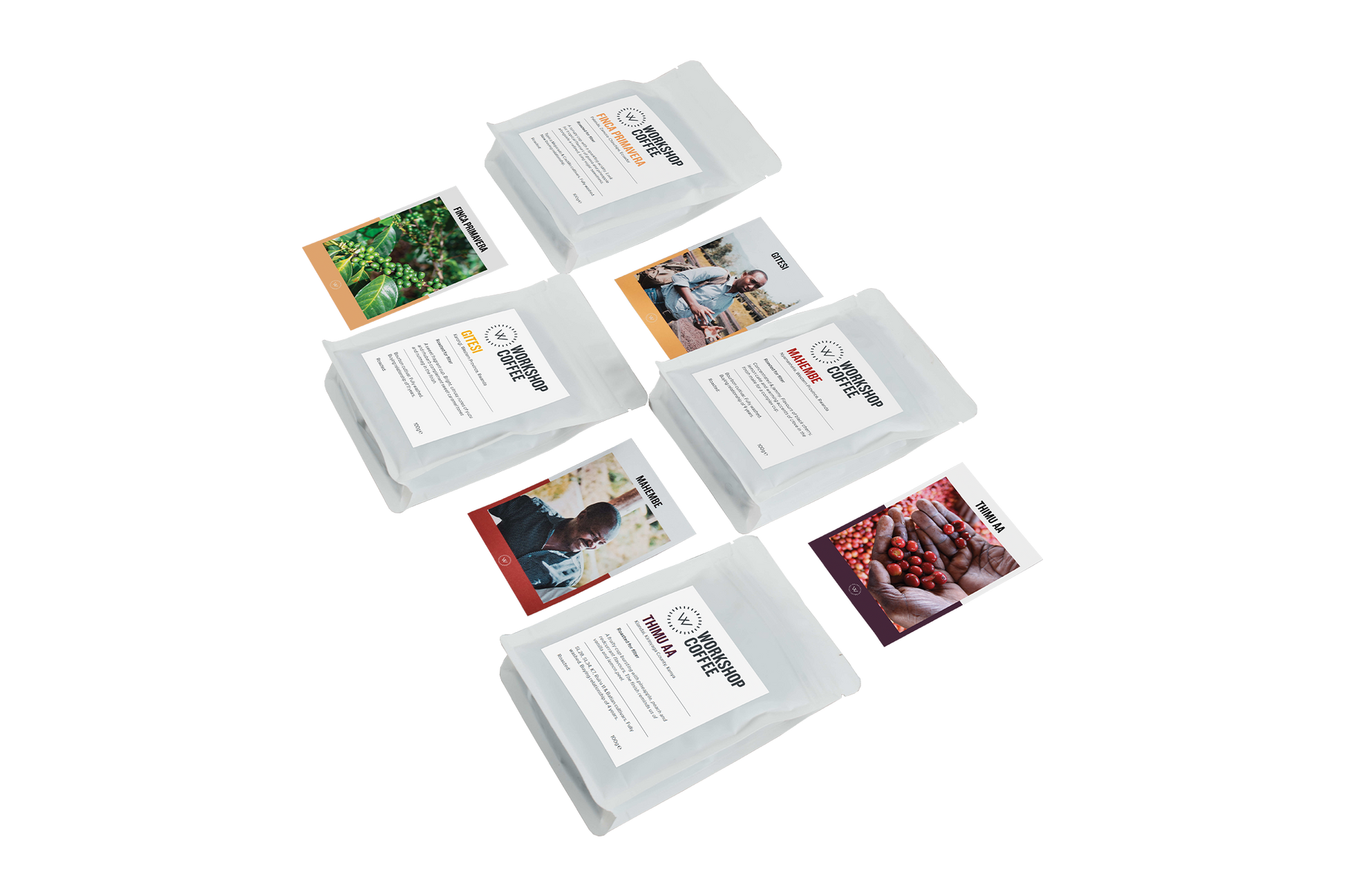
The packaging consists of several flat, smooth boxes made of single-layer paperboard. Each box has a clean, precise construction with no visible fluted layers, indicating a lightweight appearance. The boxes are predominantly white with colorful graphics and text on the front, showcasing various coffee blends. The edges are neatly folded, and the overall design is consistent across the different boxes, suggesting a cohesive branding strategy.

The packaging is a stand-up pouch made from a flexible material, likely a multi-layer film that provides barrier properties to preserve freshness. The front features a matte finish with a dark green background, prominently displaying the brand name 'WORKSHOP COFFEE' in white lettering. Below the brand name, there is a label indicating the coffee type 'El Nevado' along with its origin 'India, Colombia'. The edges are sealed, and the top has a resealable zipper for convenience.

The packaging is a flat, stand-up pouch made from a flexible material, likely a composite of plastic and foil. The bag is primarily dark green with a matte finish, featuring a prominent white label in the center. The label contains product information and branding elements. The top of the bag is sealed, and there is a tear notch for easy opening. The overall shape is rectangular with a slightly tapered bottom, allowing it to stand upright.
About the Brand
Workshop Coffee delivers premium single-origin coffees, curated blends, and coffee accessories primarily through an online platform. The brand is recognized for its commitment to product freshness, transparent sourcing from smallholder farms, and a consistent focus on sustainability throughout its operations.
Their packaging portfolio spans flexible stand-up pouches and retail folding cartons, designed for optimal product preservation and visual appeal. With a small, agile team, Workshop Coffee leverages a vertically integrated approach to sourcing and fulfillment, supporting ethical trade and environmental stewardship. The brand maintains rigorous quality control and actively updates its product lineup to reflect seasonal offerings and market trends.
Key Differentiator: Workshop Coffee's unique positioning stems from its integration of sustainable packaging—such as home-compostable capsules—and a design system that unifies minimalism with robust brand recognition, catering to a discerning specialty coffee audience.
Design System
Visual Style
Consistent use of sans-serif typography, a restrained dark green and white color palette, and a matte finish aesthetic define the brand's visual style. The overall approach is minimalistic and modern, supporting clarity and premium positioning.
Brand Identity
Prominent display of the Workshop Coffee logo and product names forms the core of the brand identity. Iconography is limited, favoring text and color blocking for differentiation. Visual consistency is maintained across all SKUs to strengthen brand recognition.
Packaging Design
Material selection emphasizes high-barrier flexible films for pouches and rigid, recyclable paperboard for cartons. The structural philosophy centers on stand-up formats for visibility and protection, with resealable features and flat, clean lines for ease of storage and shipping.
User Experience
Design choices facilitate an elevated unboxing process, clear navigation of product information, and straightforward resealability. The packaging supports the customer journey from online purchase to product use, reinforcing the brand's commitment to quality and sustainability at every touchpoint.
Company Metrics
Business insights for Workshop Coffee based on available data
Market Positioning
Brand Values & Focus
Key Competitors
Target Market: Discerning coffee consumers seeking specialty-grade products with a focus on sustainability, transparency, and premium experience, primarily in the UK and broader European markets.
Packaging Assessment
Overall Grade
Visual appeal and presentation quality
Packaging durability and protection
Eco-friendliness and recyclable materials
Cost efficiency and value for money
Packaging assessment for Workshop Coffee based on industry standards and best practices
Frequently Asked Questions
What types of packaging does Workshop Coffee primarily use?
Workshop Coffee utilizes flexible stand-up pouches for coffee beans and grounds, alongside folding carton boxes for capsules and gift sets. These formats are selected for their preservation properties, visual consistency, and environmental considerations.
How does Workshop Coffee address sustainability in its packaging?
The company incorporates home-compostable capsules and prioritizes recyclable materials in its packaging, aiming to minimize environmental impact while maintaining product integrity.
What is the focus of Workshop Coffee's packaging design?
The design emphasizes minimalism, consistent brand elements, and clear product information, supporting both the premium positioning and the unboxing experience for customers.
Discover other Food & Drink companies
Explore more companies in the food & drink industry and their packaging strategies
Teegschwendner GmbH
Food & Drink
Teegschwendner GmbH is a specialty tea company based in Germany, offering a wide selection of high-quality teas and tea-related accessories. They focus on providing unique tea experiences through carefully sourced and curated products.
Thés de la Pagode
Food & Drink
Thés de la Pagode is a French company specializing in organic teas and infusions, focusing on health and well-being. Established in 1987, they prioritize sustainable practices and high-quality ingredients sourced through fair trade.
PrepMyMeal
Food & Drink
PrepMyMeal is a food production company specializing in high-protein meal delivery services. They offer a variety of natural, nutritious meals designed for fitness enthusiasts and those seeking convenience in meal preparation.