Vitaline packaging
Vitaline, a French nutrition brand, specializes in ready-to-consume meals and snacks designed for daily health and athletic performance. Their packaging strategy emphasizes convenience, visual clarity, and strong brand consistency across flexible pouches, carton boxes, and beverage bottles.
Packaging Portfolio
Vitaline employs a diverse packaging portfolio including multi-layer flexible pouches with resealable closures, single-layer paperboard carton boxes, and PET beverage bottles. These structures are selected for shelf stability, product freshness, and efficient logistics. The packaging is consistently branded, with prominent use of color-coded nutritional cues, matte and glossy finishes, and practical features such as transparent windows and easy-open zippers. This approach balances marketing visibility, product protection, and operational efficiency across multiple SKUs.

The packaging consists of stand-up pouches made from a flexible material that allows them to maintain an upright position. Each pouch features a clear window at the front, showcasing the product inside. The pouches have a matte finish with vibrant colors and graphics, including images of the contents (almonds, tomatoes, and cacao). The top of each pouch is sealed and features a resealable zipper for convenience.

The packaging consists of a series of flat, rectangular boxes made from single-layer paperboard. Each box features a smooth, flat construction with clean edges and folds. The boxes are predominantly white with colorful graphics depicting the product contents, including images of tomatoes, chocolate, and red fruits. The design includes vibrant colors and a glossy finish, enhancing visual appeal. Each box has a top flap that folds down for closure, with no visible signs of wear or damage.

The packaging is a stand-up pouch made from a multi-layer film. It features a resealable top and a flat bottom that allows it to stand upright. The front displays a glossy finish with vibrant colors and images of the product, including chocolate cookies and a splash of chocolate, enhancing visual appeal. The back likely contains nutritional information and other product details, although not visible in this view.
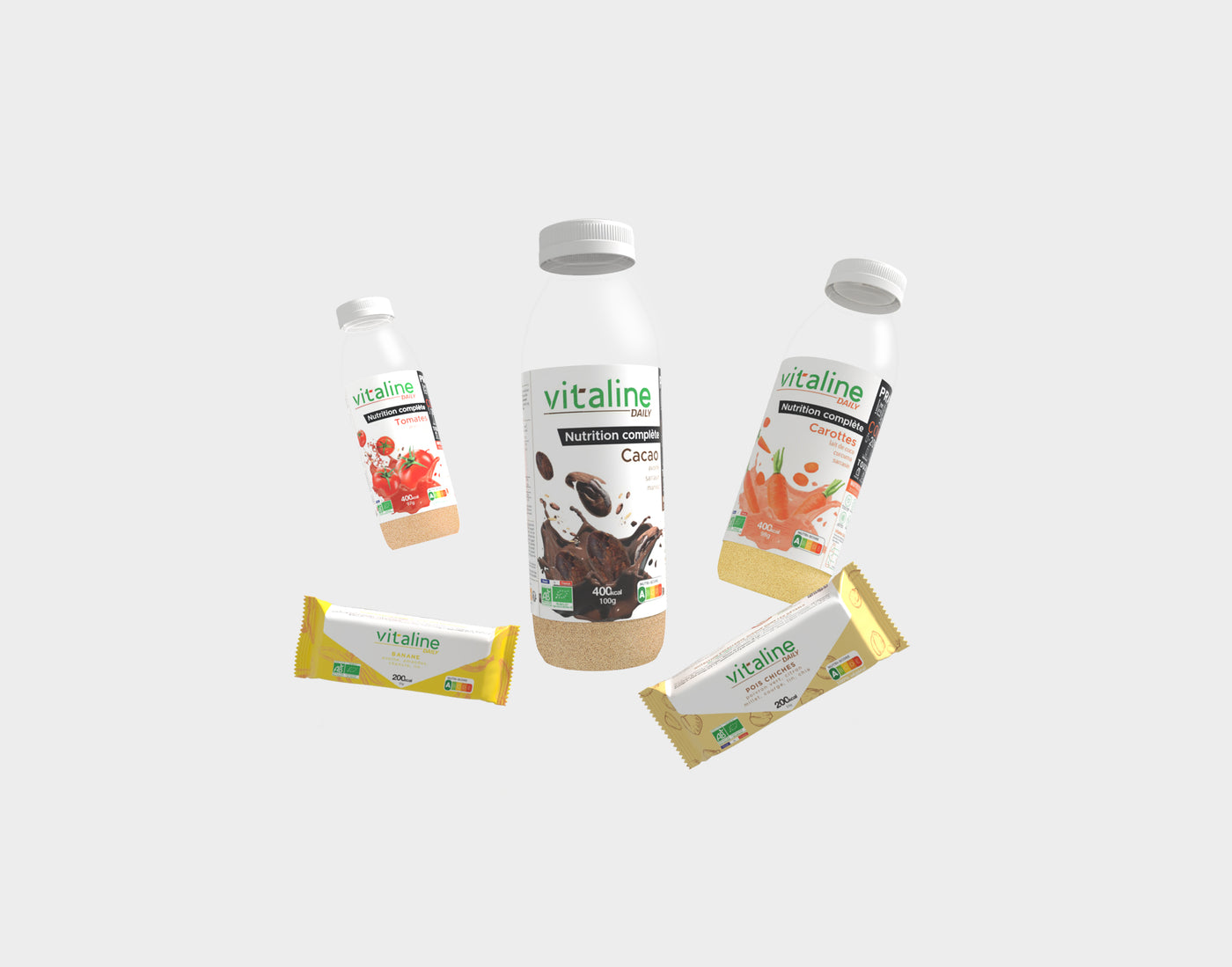
The image displays a variety of beverage bottles and snack bars. The beverage bottles are made of plastic with a smooth surface, featuring a cylindrical shape and a screw-on cap. The snack bars are individually wrapped in flexible packaging, showcasing a rectangular shape with a glossy finish. The overall appearance is clean and modern, with vibrant colors and clear labeling.
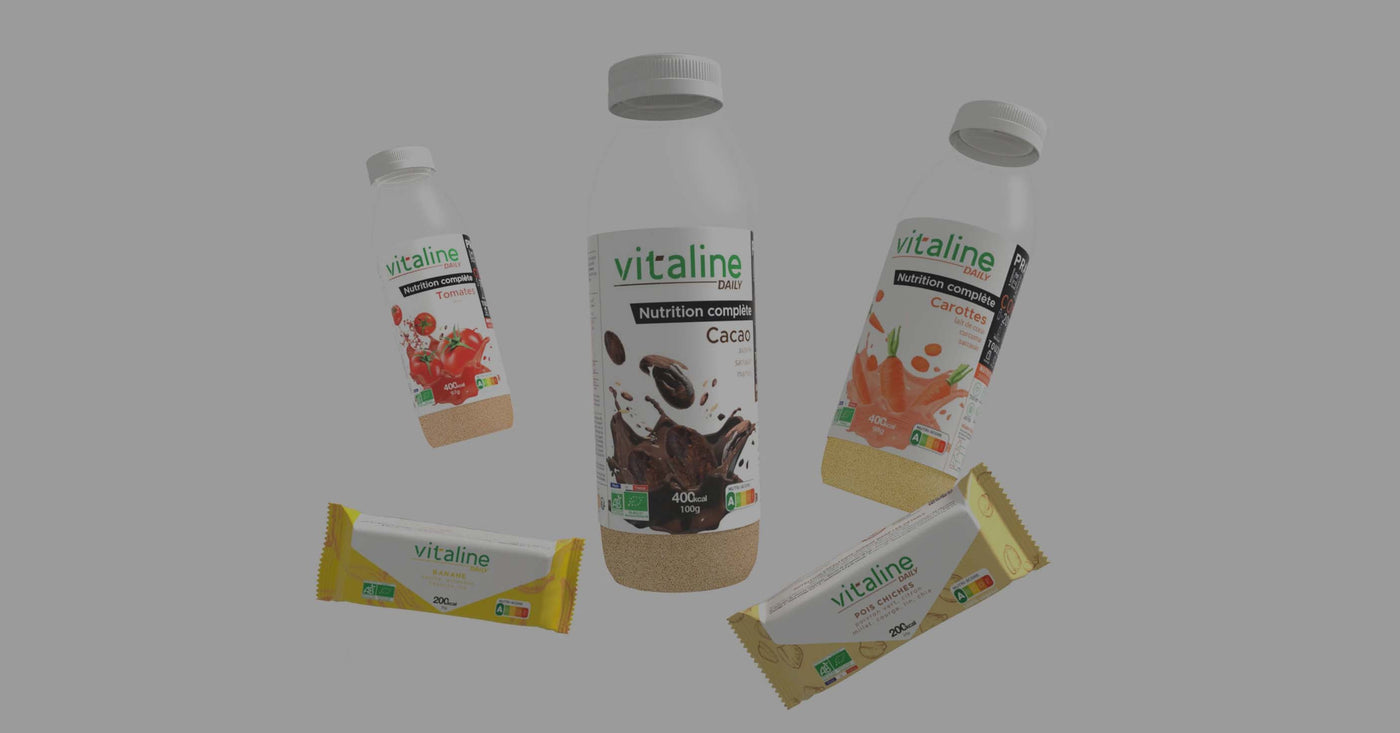
The image features a variety of packaging types including beverage bottles and snack bars. The beverage bottles are made of clear plastic with a smooth surface, showcasing the contents inside. They have a rounded shape with a screw-on cap. The snack bars are in rectangular packaging with a smooth, flat construction, likely made of paperboard, featuring vibrant colors and graphics.
About the Brand
Vitaline operates in the European food and drink sector, delivering nutritionally complete products in practical, easy-to-use packaging. Their approach leverages modern material science and branding to meet the dual demands of health-conscious consumers and logistical efficiency.
Founded in 2015 and based in Paris, Vitaline targets consumers seeking high-quality nutrition with minimal preparation. The brand covers a spectrum of dietary needs—vegan, organic, and performance-focused—using packaging formats that prioritize both freshness and shelf appeal. Their direct-to-consumer model enables tight control over packaging quality, user experience, and sustainability initiatives.
Key Differentiator: Vitaline's integration of resealable, visually engaging packaging and clear labeling distinguishes its approach to delivering convenience without compromising nutritional transparency or environmental considerations.
Design System
Visual Style
Modern sans-serif typography, a palette of white backgrounds with bold accent colors reflecting product flavors (e.g., green for vegetables, brown for cacao), and a clean, uncluttered layout. Visual hierarchy emphasizes readability and clear nutritional information.
Brand Identity
Consistent application of the Vitaline logo and product names across all formats, with iconography denoting dietary attributes (vegan, organic) and strong adherence to color-coded product segmentation. Visual assets reinforce trust and transparency.
Packaging Design
Preference for lightweight, recyclable materials such as multilayer films for pouches and single-layer carton for boxes. Structural design focuses on resealability, ease of storage, and robust shelf presentation, with minimal excess material to optimize shipping and reduce waste.
User Experience
Packaging is designed for straightforward unboxing, with resealable features supporting repeated use and information-rich labeling enhancing consumer confidence. The overall user journey is supported by intuitive packaging that aligns with health-focused brand messaging.
Company Metrics
Business insights for Vitaline based on available data
Market Positioning
Brand Values & Focus
Key Competitors
Target Market: Health-conscious European consumers seeking convenient, nutritionally complete food and beverage solutions, including athletes and those with specialized dietary needs.
Packaging Assessment
Overall Grade
Visual appeal and presentation quality
Packaging durability and protection
Eco-friendliness and recyclable materials
Cost efficiency and value for money
Packaging assessment for Vitaline based on industry standards and best practices
Frequently Asked Questions
What types of packaging does Vitaline use for its products?
Vitaline utilizes flexible stand-up pouches, single-layer carton boxes, beverage bottles, and individually wrapped snack bars. Each format is selected for optimal product protection, convenience, and clear communication of nutritional content.
How does Vitaline address sustainability in its packaging?
Vitaline incorporates recyclable materials where possible and designs packaging to minimize waste, focusing on formats that balance product preservation with environmental impact. The use of multi-layer films and paperboard is aligned with industry trends toward improved recyclability.
How does the packaging support the unboxing and user experience?
Packaging is designed to be visually appealing and easy to open, with resealable features for pouches and clear, information-rich labeling to support consumer confidence and repeat use.
Discover other Food & Drink companies
Explore more companies in the food & drink industry and their packaging strategies
kerex - terre exotique
Food & Drink
Kerex - Terre Exotique specializes in the international trade of gourmet food and drink products, offering a unique selection of spices and culinary ingredients.
Thés de la Pagode
Food & Drink
Thés de la Pagode is a French company specializing in organic teas and infusions, focusing on health and well-being. Established in 1987, they prioritize sustainable practices and high-quality ingredients sourced through fair trade.
Terres de Café
Food & Drink
Terres de Café is a specialty coffee retailer based in Paris, France, known for its commitment to sustainability and high-quality coffee sourcing.