Steve Madden packaging
Steve Madden is a leading apparel brand specializing in trend-driven footwear, bags, and accessories, with a robust direct-to-consumer model. Their packaging strategy emphasizes minimalist branding and a blend of cost efficiency, product protection, and evolving sustainability initiatives.
Packaging Portfolio
Steve Madden’s packaging portfolio is dominated by kraft paperboard carton boxes and retail bags, optimized for both in-store display and e-commerce distribution. The use of uncoated, single-layer paperboard and recyclable materials indicates a focus on sustainability, while minimalist branding—primarily large, centered brand names and simple geometric patterns—maintains design consistency. Color palettes and material finishes are chosen for durability and cost-effectiveness. Occasional use of embossed logos and reusable shopping totes suggests ongoing adaptation to evolving market expectations for eco-friendly packaging.

The packaging is a flat, square box made from a single layer of brown paperboard. The edges are smooth and the construction is clean, indicating a folding carton design. The surface is matte with a natural kraft finish, giving it a simple yet elegant appearance. The top features a printed logo and website in black ink, centered on the box. The box has no visible flaps or tabs on the top, suggesting a tuck-in closure.

The packaging consists of multiple flat, rectangular boxes made from a single layer of brown kraft paperboard. Each box has a smooth, flat construction with clean edges and precise folds. The boxes are uniform in size and shape, indicating they are designed for retail display. The surface is uncoated, showcasing the natural kraft texture, and the boxes have a minimalist design with a simple, embossed logo.
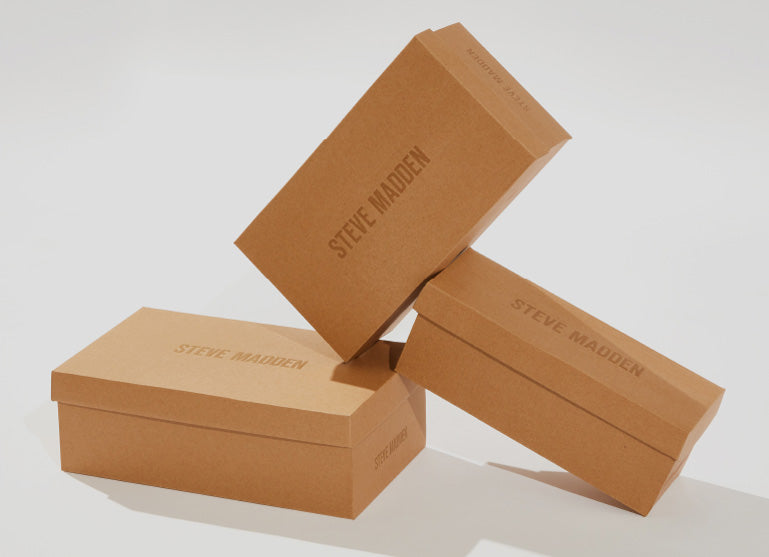
The packaging consists of three flat, rectangular boxes made of a smooth, single-layer paperboard. Each box has clean, precise edges and folds, with a kraft brown exterior. The boxes are stacked in a slightly staggered arrangement, showcasing their flat construction. The surface appears matte without any gloss or additional coatings. The boxes feature the brand name 'STEVE MADDEN' printed in a bold, sans-serif font, centered on the top surface of each box. The printing is done in a slightly darker shade of brown, providing a subtle contrast against the kraft background.
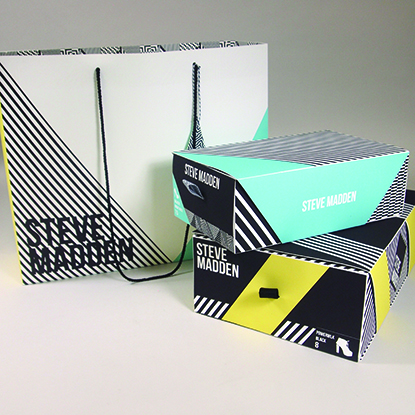
The packaging consists of a retail shopping bag and a shoe box. The shopping bag features a smooth, flat construction with a white background and bold black diagonal stripes. The bag has two black rope handles for carrying. The shoe box is designed with a colorful geometric pattern, primarily in shades of black, yellow, and teal, with the brand name 'STEVE MADDEN' prominently displayed on the sides. The box has clean edges and is likely made from a single-layer paperboard, indicating a lightweight appearance.
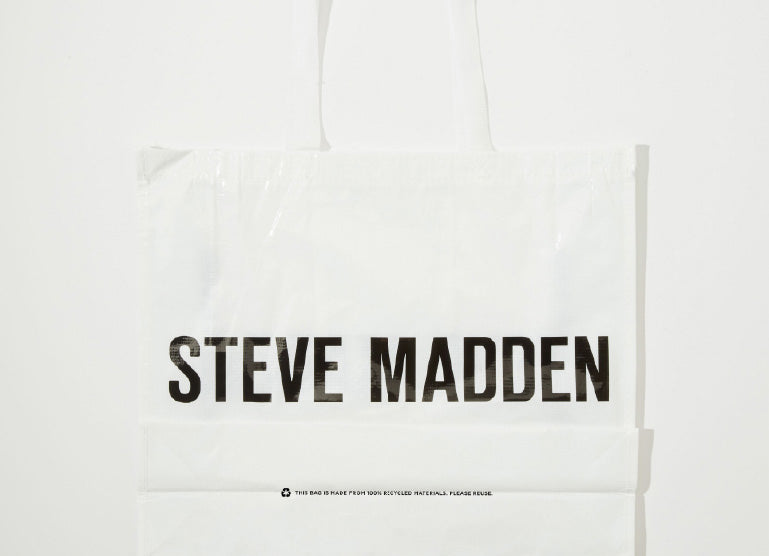
The packaging is a white retail shopping bag made from a thin, flexible plastic material. It features a simple design with a large, bold black text that reads 'STEVE MADDEN' prominently displayed on the front. The bag has a flat bottom and is open at the top, with two handles made from the same plastic material, allowing for easy carrying. The overall appearance is clean and minimalistic, with no additional graphics or images.
About the Brand
Steve Madden operates in the fashion apparel sector, delivering a diverse range of shoes, bags, and accessories to a global audience. The company leverages a D2C approach supported by e-commerce, with packaging designed for both retail display and online fulfillment.
Founded in 1990 and headquartered in New York, Steve Madden targets fashion-conscious consumers seeking affordable, on-trend products. Their packaging approach combines branded carton boxes and retail bags, balancing cost considerations with brand visibility and logistical efficiency. The company demonstrates a medium likelihood of custom packaging, driven by strong branding needs and frequent seasonal launches.
Key Differentiator: Steve Madden differentiates itself through consistent minimalist branding, high-volume e-commerce fulfillment, and a transition toward more sustainable packaging materials, particularly kraft paperboard and reusable retail bags.
Design System
Visual Style
Typography is bold, sans-serif, and highly legible, often in black or dark brown on neutral kraft or white backgrounds. The color palette is primarily minimal, utilizing kraft brown, white, and black, with occasional accent colors in special collections.
Brand Identity
Consistent use of the 'STEVE MADDEN' name in uppercase, either printed or embossed, establishes strong brand recall. Iconography is minimal or absent, focusing on clean lines and prominent brand text for visual clarity across all packaging formats.
Packaging Design
Material selection prioritizes recyclable kraft paperboard and lightweight plastics, with structural designs favoring flat, stackable boxes and durable retail totes. The design philosophy emphasizes minimalism, cost efficiency, and easy product access.
User Experience
Packaging is engineered for a smooth unboxing experience and efficient logistics, supporting both retail presentation and e-commerce fulfillment. Branding is clear and immediate, contributing to a cohesive customer journey from purchase to product reveal.
Company Metrics
Business insights for Steve Madden based on available data
Market Positioning
Brand Values & Focus
Key Competitors
Target Market: Fashion-conscious consumers, primarily women aged 18-35, seeking stylish yet affordable footwear and accessories via retail and e-commerce channels.
Packaging Assessment
Overall Grade
Visual appeal and presentation quality
Packaging durability and protection
Eco-friendliness and recyclable materials
Cost efficiency and value for money
Packaging assessment for Steve Madden based on industry standards and best practices
Frequently Asked Questions
What types of packaging materials does Steve Madden use?
Steve Madden predominantly uses single-layer kraft paperboard for carton boxes and lightweight plastic for retail shopping bags, with increasing adoption of uncoated, recyclable, and reusable materials.
How does Steve Madden balance branding and sustainability in their packaging?
The brand employs minimalist design elements—such as subtle embossing and prominent brand names—on recyclable kraft boxes, with select use of reusable shopping totes to reduce environmental impact.
Is Steve Madden's packaging optimized for e-commerce?
Yes, packaging structures are designed for durability during last-mile delivery and efficient stacking, supporting high-volume online sales while maintaining brand consistency.
Discover other Apparel companies
Explore more companies in the apparel industry and their packaging strategies
Menswear Online
Apparel
Menswear Online is a UK-based e-commerce retailer specializing in stylish men's clothing and accessories. The company offers a wide selection of premium brands, including Armani Exchange and Lacoste.
Alexander Shorokhoff
Apparel
Alexander Shorokhoff is a luxury watch manufacturer that specializes in creating unique and artistic timepieces. Their products blend traditional craftsmanship with modern designs, appealing to discerning customers worldwide.
ALTI
Apparel
ALTI specializes in unique, handcrafted silver jewelry designed by skilled artisans in Sweden. The company offers a range of customizable options and promotes a tranquil lifestyle through its jewelry collections.