Jellycat packaging
Jellycat specializes in imaginative plush toys, utilizing branded packaging solutions that emphasize visual appeal and product protection. Their approach integrates playful design elements with robust material choices, creating a cohesive unboxing experience for both children and adults.
Packaging Portfolio
Jellycat's packaging portfolio features a diverse mix of structural formats, including rigid luxury gift boxes, vibrant drawstring fabric bags, and retail-optimized carton boxes with custom inserts. Material selection emphasizes durability and tactile appeal, with frequent use of chipboard, paperboard, and fabric components. Advanced branding techniques such as full-color printing, logo repetition, and custom tissue paper are consistently applied, supporting both shelf presence and consumer gifting occasions. Packaging formats are chosen to balance display quality and logistics performance, reflecting a data-driven approach to both customer experience and product protection.
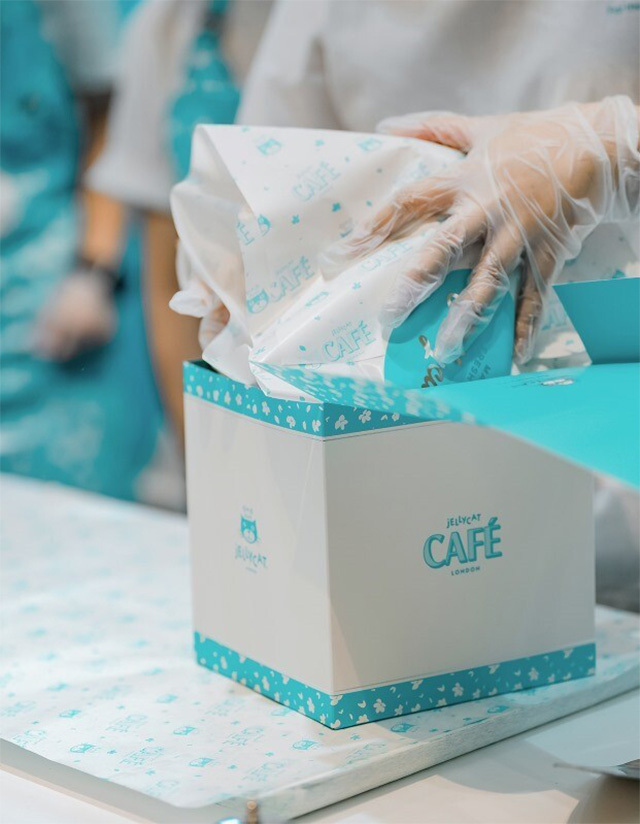
The packaging is a square-shaped box with a thick, sturdy construction. It features a clean, smooth surface with a glossy finish. The exterior is predominantly white with turquoise accents, including the brand name 'Jellycat CAFE' prominently displayed on the front. The box is partially open, revealing tissue paper inside that is also printed with a repeating pattern of the brand's logo. The edges of the box are sharp and well-defined, indicating high-quality manufacturing.

The packaging is a flat, clear plastic pouch with a cardboard backing. The front displays colorful stickers featuring a cartoon cat and other designs. The edges are smooth and the overall appearance is clean and precise. The top has a hole for hanging display, indicating retail use.
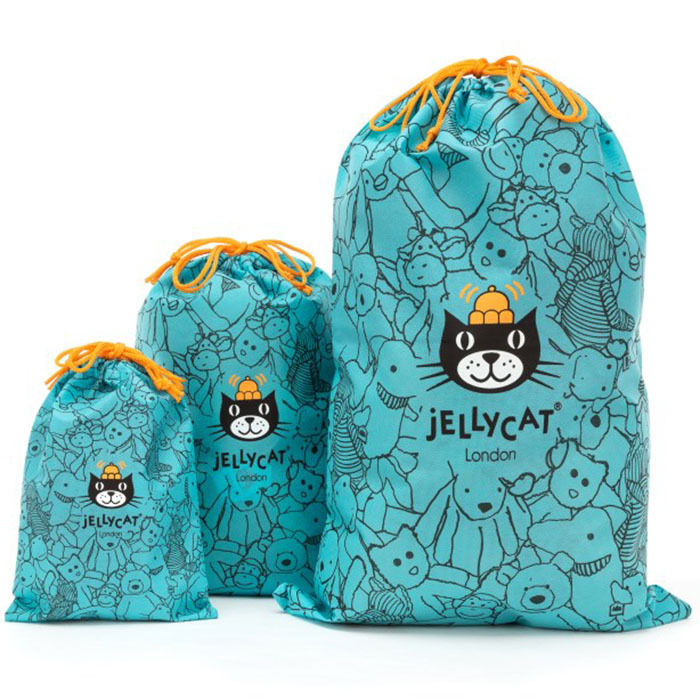
The packaging consists of three drawstring bags of varying sizes, all featuring a vibrant turquoise background with a playful pattern of various animal illustrations. The bags are cinched at the top with an orange drawstring, allowing for easy closure and portability. Each bag prominently displays a black cat logo with the text 'JELLYCAT London' beneath it, creating a cohesive branding element across all sizes.
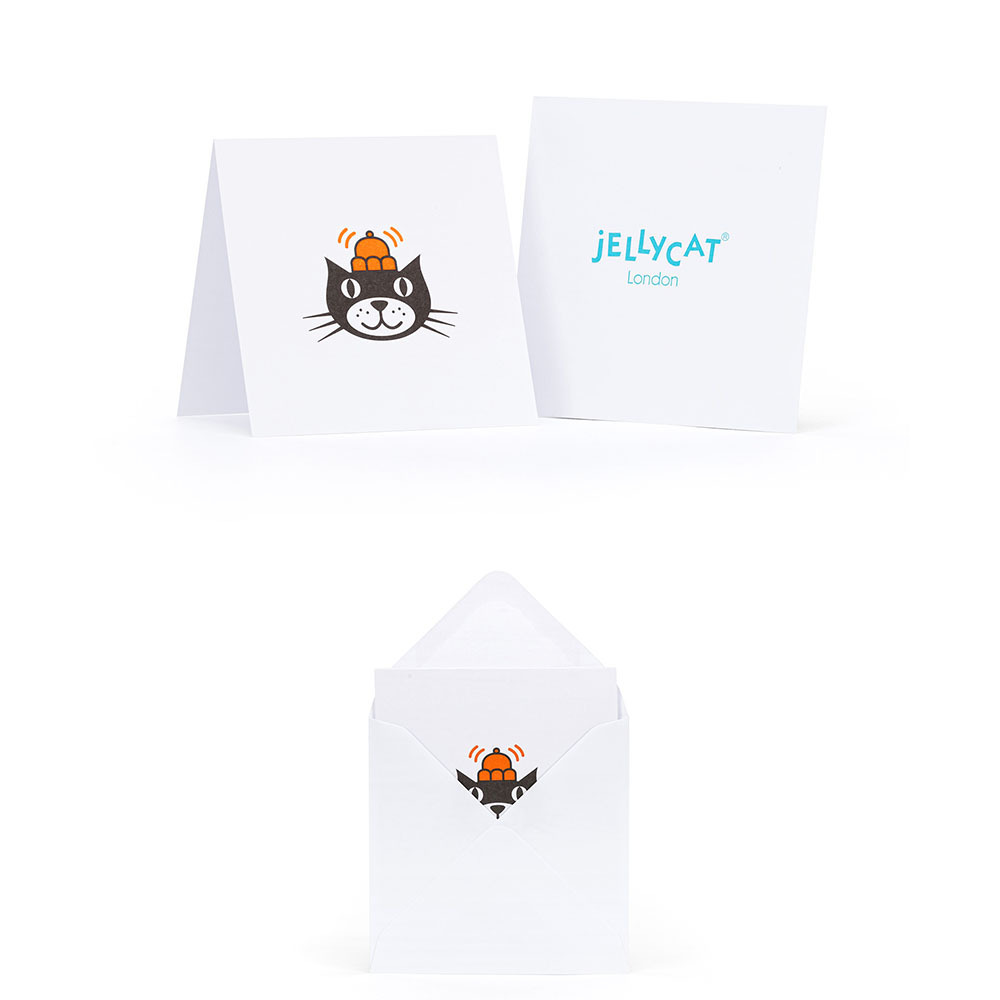
The packaging consists of a folded greeting card and a matching envelope. The card features a simple design with a cartoon cat illustration on the front, accompanied by a playful color scheme. The envelope is plain and complements the card's design. Both items are made from smooth, flat paperboard without any fluted layers, indicating a single-layer construction typical of carton boxes.
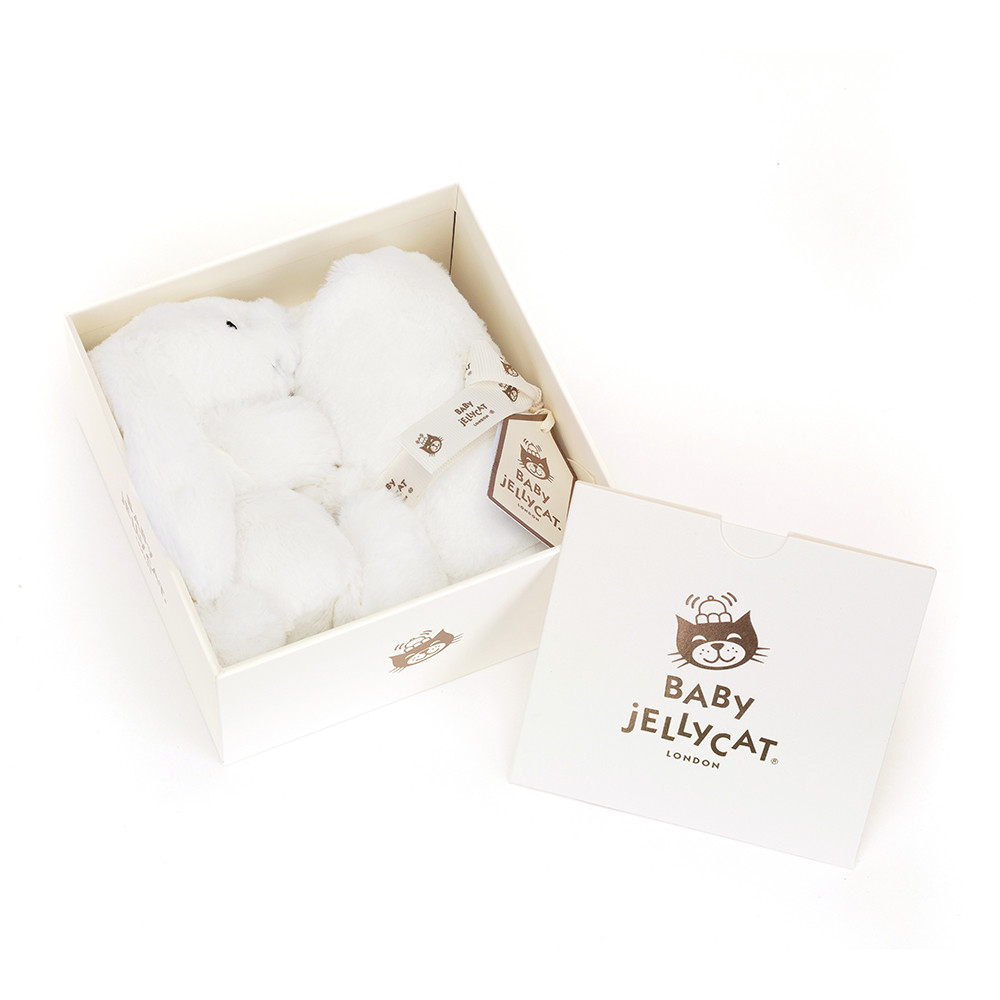
The packaging is a rigid box with a thick, sturdy construction. It features a clean, smooth exterior with a matte finish. The box is square-shaped and has a lid that opens to reveal the contents inside. The interior is likely designed to securely hold the plush toys, providing a premium presentation.

The packaging is a rigid box with a sturdy construction, featuring thick chipboard walls. The exterior is adorned with a light blue background and a whimsical, repeated pattern of sea creatures in a darker blue. The box has a clean, precise shape with sharp edges and corners, indicative of high-quality manufacturing. Inside, there is a contrasting blue lining that adds a touch of elegance. A folded card with the 'jellycat' logo is placed on top of a plush item inside the box.
About the Brand
Jellycat is a London-based leader in the toys and hobbies sector, recognized for high-quality, whimsical plush toys and accessories. The company employs a distinctive packaging strategy that combines strong brand identity with a focus on safety and presentation. Their packaging selection includes rigid boxes, drawstring bags, and carton solutions, all tailored to protect products while reinforcing the brand's playful aesthetic.
Operating globally with a monthly revenue exceeding $80 million, Jellycat's packaging practices reflect an emphasis on brand consistency, retail presentation, and logistics efficiency. The brand frequently updates its product and packaging lines to align with seasonal themes and collector trends, leveraging packaging as a core component of its customer engagement strategy. Procurement and merchandising roles are heavily involved in packaging decisions, ensuring alignment with both supply chain and marketing objectives.
Key Differentiator: Jellycat stands out for integrating whimsical, child-centric design across all packaging formats while maintaining consistent branding and high product protection standards.
Design System
Visual Style
Jellycat employs playful sans-serif typography, a turquoise-dominant color palette accented with orange and white, and whimsical animal-themed illustrations. The overall aesthetic is bright, friendly, and inviting, appealing to both children and adults.
Brand Identity
Logo usage is prominent and consistent across all packaging, often paired with the 'London' subtext. Iconography centers on stylized animal motifs, ensuring visual unity. Packaging designs prioritize high recognizability and immediate brand association.
Packaging Design
Material choices prioritize rigid chipboard for gift boxes, smooth paperboard for retail packaging, and durable cotton or polyester for fabric bags. Structural design emphasizes secure closures, clean edges, and premium finishes for a refined unboxing.
User Experience
The design system supports the customer journey by delivering an engaging, joyful unboxing experience, intuitive packaging ergonomics, and clear brand storytelling from first glance to product reveal.
Company Metrics
Business insights for Jellycat based on available data
Market Positioning
Brand Values & Focus
Key Competitors
Target Market: Jellycat targets consumers globally, focusing on children, parents, and collectors seeking premium plush toys and gift items.
Packaging Assessment
Overall Grade
Visual appeal and presentation quality
Packaging durability and protection
Eco-friendliness and recyclable materials
Cost efficiency and value for money
Packaging assessment for Jellycat based on industry standards and best practices
Frequently Asked Questions
What types of packaging does Jellycat use?
Jellycat utilizes a mix of rigid boxes, drawstring fabric bags, flat carton boxes, and customized retail-friendly packaging to both protect their plush toys and enhance the unboxing experience.
How does Jellycat's packaging reinforce its brand identity?
Brand identity is reinforced through consistent use of playful colors, animal motifs, and prominent logo placement on all packaging formats, ensuring immediate brand recognition.
Is Jellycat's packaging environmentally friendly?
Jellycat's packaging demonstrates some sustainability practices, such as selective use of recyclable carton and paperboard materials, but additional transparency on material sourcing and recyclability is advisable for a higher sustainability rating.
Discover other Toys & Hobbies companies
Explore more companies in the toys & hobbies industry and their packaging strategies
Casdon Ltd
Toys & Hobbies
Casdon Ltd is a consumer goods company specializing in high-quality toys that replicate real-life household products. Founded in 1946, the company aims to provide imaginative and educational play experiences for children.
James Galt & Company Limited (Jumbo Group)
Toys & Hobbies
James Galt & Company Limited specializes in consumer goods, particularly toys and educational products for children. Established in 1836, the company focuses on providing quality products that promote learning through play.
Orange Tree Toys
Toys & Hobbies
Orange Tree Toys specializes in the design and manufacture of high-quality wooden toys aimed at young children, emphasizing sustainability and safety.