forest gum packaging
Forest Gum, a Cologne-based chewing gum manufacturer, specializes in vegan, sugar-free products with an emphasis on environmentally responsible, plastic-free packaging. The company's packaging approach prioritizes sustainable carton materials and bold, brand-consistent designs to reinforce its health and eco-friendly positioning.
Packaging Portfolio
Forest Gum’s packaging portfolio is composed exclusively of single-layer paperboard folding cartons, optimized for both retail display and e-commerce fulfillment. The structures include upright retail cartons and open-top display boxes, providing strong brand visibility and efficient shelf arrangement. Cartons are produced with clean folds, matte or glossy finishes, and vibrant color schemes, ensuring both functional protection and high consumer appeal. The use of lightweight, recyclable paperboard aligns with sustainability objectives while maintaining cost-effectiveness for mid-volume D2C operations.

The packaging consists of a smooth, flat construction with clean edges and folds, indicative of a folding carton. The box is primarily a vibrant green color with bold red typography. The front features the brand name 'Forest GUM' prominently displayed, along with product information. The box has a glossy finish, enhancing its visual appeal. There are no visible fluted layers, confirming it as a carton box rather than a corrugated box.

The packaging consists of several colorful folding cartons stacked in a visually appealing arrangement. Each carton has a smooth, flat construction without visible fluted layers, indicating they are made from single-layer paperboard. The cartons feature a vibrant color palette, predominantly in shades of green and pink, with bold typography. The edges and folds of the cartons are clean and precise, typical of retail packaging. The cartons are designed to stand upright, showcasing their branding and product information prominently.
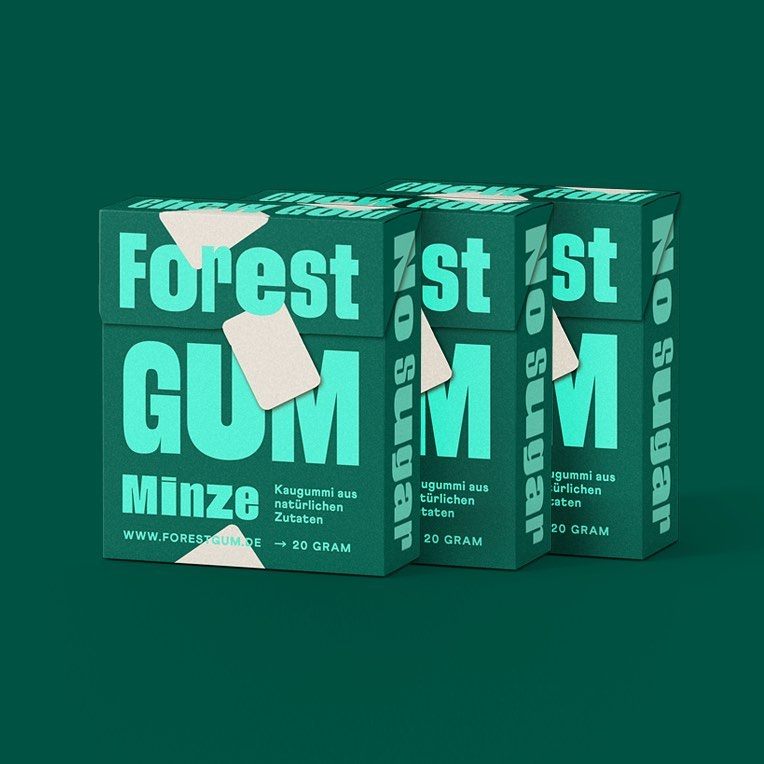
The packaging consists of a smooth, flat construction made from single-layer paperboard. The boxes are predominantly green with bold white text, indicating the product name 'Forest GUM' and additional details such as 'Minze' and 'No sugar'. The edges are clean and precise, with a matte finish that gives a modern appearance. The boxes are designed to stand upright, showcasing the branding clearly.

The packaging is a retail display box made of smooth, single-layer paperboard. It features a flat construction with clean edges and folds, designed to hold multiple units of the product. The box has a vibrant green background with large pink text that reads 'Forest GUM' prominently on the front and sides. The top of the box is designed to be open for easy access to the products inside.
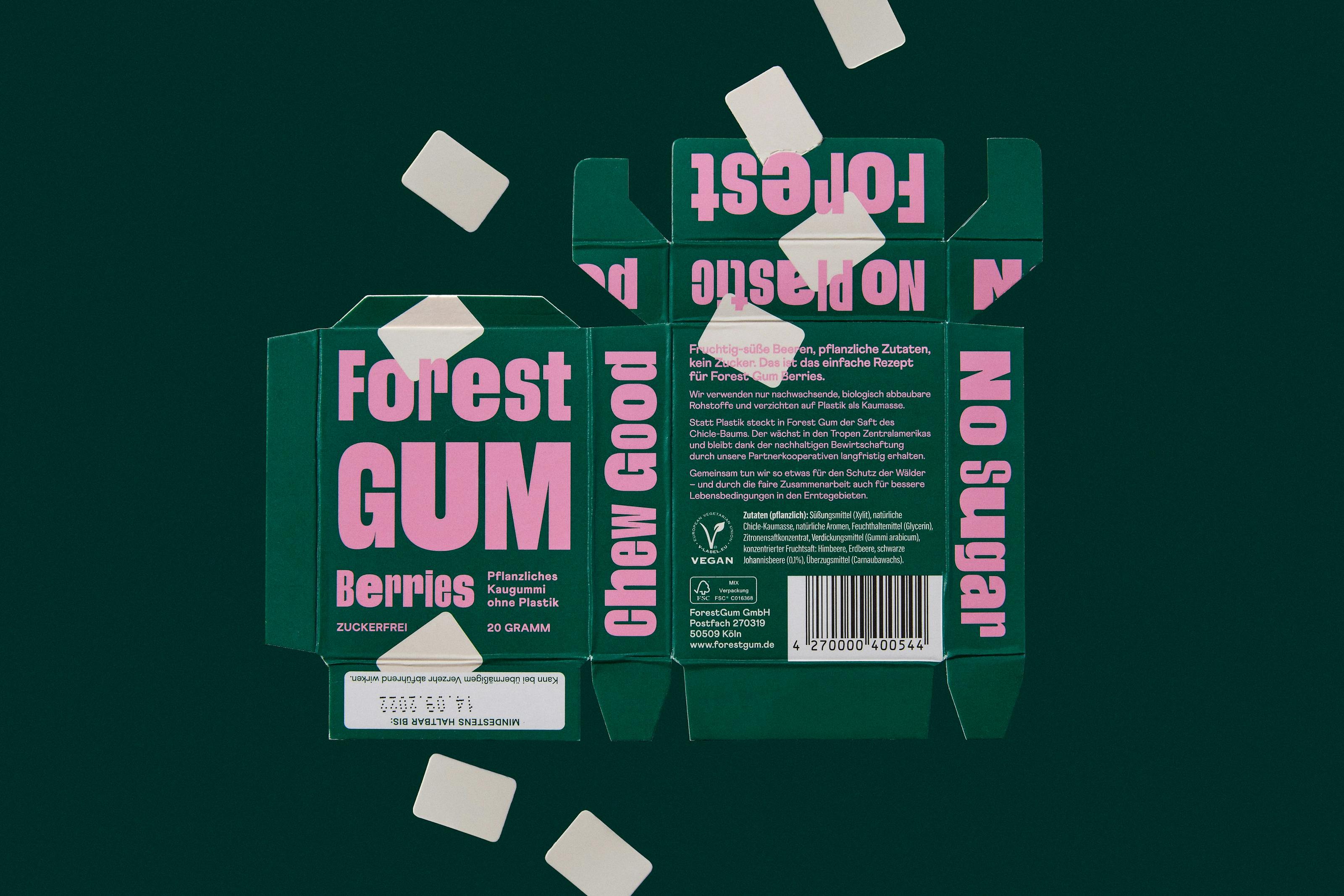
The packaging is a flat, folding carton made of single-layer paperboard. It features a smooth, flat construction with clean edges and folds. The exterior is predominantly dark green with bold pink text and graphics. The design includes a prominent logo and product information, with a glossy finish that enhances the visual appeal.

The packaging is a flat, smooth, single-layer paperboard carton featuring a vibrant green background. The front displays bold, colorful text in pink and blue, indicating the product name 'Forest GUM' along with flavor descriptions such as 'Berries', 'Cassis', and 'Eucalyptus Menthol'. The edges are clean and precise, with no visible fluted layers, characteristic of carton boxes. The overall appearance is lightweight and designed for retail display.
About the Brand
Forest Gum operates in the Food & Drink sector, focusing on producing vegan, sugar-free chewing gum and sweets for health-conscious consumers. Founded in 2019, the company has positioned its brand around sustainability and natural ingredients, utilizing direct-to-consumer channels to engage with a niche market segment. Packaging is a central component of Forest Gum’s brand strategy, serving both as a protective medium and a vehicle for sustainability messaging.
The company’s packaging is primarily composed of single-layer paperboard carton boxes designed for retail display and e-commerce. Forest Gum’s packaging structure supports product protection while minimizing environmental impact, aligning with the brand’s mission to eliminate plastic. The visual system leverages bold colors and minimalist layouts, providing high shelf visibility and clear communication of product benefits. This approach enables Forest Gum to reinforce its values throughout the customer journey, from unboxing to disposal.
Key Differentiator: Forest Gum differentiates itself by exclusively using plastic-free carton packaging that is visually distinctive and functionally optimized for retail and direct shipping, directly supporting its eco-friendly brand identity.
Design System
Visual Style
The visual design employs bold, sans-serif typography and a saturated color palette dominated by greens, pinks, reds, and whites. Layouts are minimalist, using large type and negative space to emphasize product benefits and brand messaging.
Brand Identity
Consistent logo placement and prominent use of the 'Forest GUM' mark across all packaging ensure immediate brand recognition. Supporting iconography (e.g., vegan certification, 'no sugar', and 'no plastic' icons) reinforce the health and sustainability positioning.
Packaging Design
Material selection prioritizes recyclable, single-layer paperboard with smooth finishes; structural designs favor upright cartons and easy-to-open retail boxes. Functional considerations include clear product labeling and visual segmentation by flavor.
User Experience
The packaging is designed for straightforward unboxing and immediate shelf impact, with tactile finishes and bold visual cues enhancing the consumer’s perception of sustainability and quality. The design supports a positive brand experience from purchase through disposal, aligning with eco-conscious consumer expectations.
Company Metrics
Business insights for forest gum based on available data
Market Positioning
Brand Values & Focus
Key Competitors
Target Market: Urban, health-focused consumers seeking natural, vegan, and eco-friendly snack alternatives, primarily in European Tier I markets.
Packaging Assessment
Overall Grade
Visual appeal and presentation quality
Packaging durability and protection
Eco-friendliness and recyclable materials
Cost efficiency and value for money
Packaging assessment for forest gum based on industry standards and best practices
Frequently Asked Questions
What packaging materials does Forest Gum use?
Forest Gum utilizes single-layer paperboard cartons for all primary and retail packaging, ensuring recyclability and plastic-free solutions in line with the brand’s sustainability commitments.
How sustainable is Forest Gum’s packaging?
Forest Gum’s packaging scores highly for sustainability, being fully recyclable and free from plastics or synthetic laminates, thus reducing its environmental impact compared to conventional gum packaging.
Does the packaging provide adequate product protection during shipping?
The folding carton construction offers moderate protection for chewing gum products, suitable for direct-to-consumer logistics, though it may offer less impact resistance than rigid or corrugated alternatives.
Discover other Food & Drink companies
Explore more companies in the food & drink industry and their packaging strategies
Terres de Café
Food & Drink
Terres de Café is a specialty coffee retailer based in Paris, France, known for its commitment to sustainability and high-quality coffee sourcing.
Teegschwendner GmbH
Food & Drink
Teegschwendner GmbH is a specialty tea company based in Germany, offering a wide selection of high-quality teas and tea-related accessories. They focus on providing unique tea experiences through carefully sourced and curated products.
ruf lebensmittelwerk kg
Food & Drink
RUF Lebensmittelwerk KG is a German food production company specializing in a variety of baking mixes and drink products. Founded in 1920, the company is known for its high-quality ingredients and innovative food solutions.