Asda packaging
Asda is a leading UK-based mass merchant and department store with a strong focus on affordable groceries, clothing, and household goods. Their packaging approach prioritizes high-volume, cost-effective solutions that balance branding clarity, logistics efficiency, and shelf appeal.
Packaging Portfolio
Asda’s packaging portfolio is centered on scalable, high-throughput solutions including flexible pouches with resealable features for snacks and pet products, corrugated boxes for logistics and e-commerce, and retail carton boxes for food and household items. Material selection emphasizes paperboard and corrugated fiberboard, aligning with recyclability goals while supporting cost efficiency. Bold, color-driven graphic systems ensure brand consistency and shelf standout, while structural formats are chosen for stackability and protection throughout the supply chain. Packaging is optimized for both in-store presentation and last-mile delivery performance.

The packaging is a brown corrugated box with visible fluted edges when viewed from the side. It has a sturdy construction suitable for shipping, with a clean, rectangular shape. The box features a printed logo and text on one side, indicating its purpose and branding.

The packaging consists of a retail carton for corn flakes, featuring a smooth, flat construction without fluted layers. The carton is predominantly green with a large logo at the top. The edges are clean and precise, indicating a well-constructed folding carton. The front displays colorful graphics of corn flakes and nutritional information, while the sides and back provide additional product details and barcode.
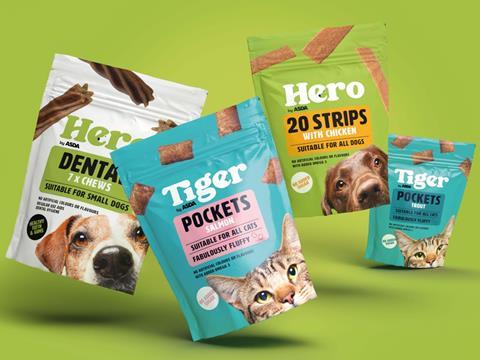
The image features several flexible pouches designed for pet treats. Each pouch has a distinct color scheme and design, with images of dogs and cats prominently displayed. The pouches are made from a flexible material that allows for easy handling and storage. They have a smooth surface finish, likely with a matte or glossy coating. The pouches are sealed at the top and have a resealable feature, ensuring freshness after opening. The overall shape is rectangular with rounded edges, and they vary in size.

The packaging is a flat, rectangular tray made of single-layer paperboard. It features a smooth, flat construction without any visible fluted layers. The tray is primarily white with a bright yellow label on the front that includes product information. The edges are clean and precise, and the overall appearance is lightweight and suitable for retail display.

The packaging consists of several retail cartons, primarily made of smooth, flat paperboard. The boxes are designed with clean, precise edges and folds, featuring a matte finish. The colors used are predominantly pastel shades, with a focus on pink and beige tones. Each box has clear labeling with product names and descriptions in bold, contrasting fonts, enhancing visibility and appeal. The overall design is modern and minimalist, aligning with contemporary packaging trends.
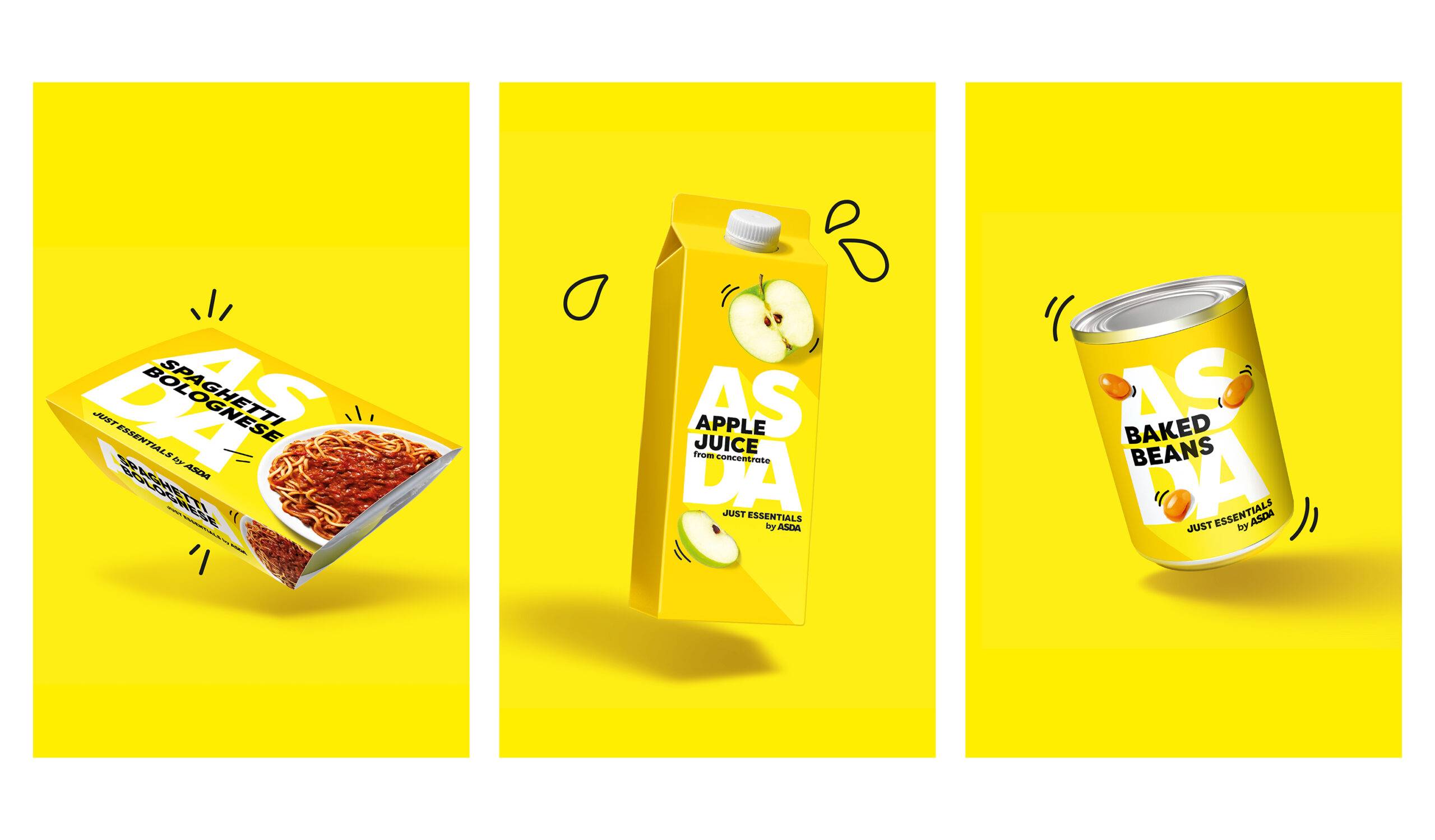
The packaging features a bright yellow background with bold, clear graphics. The leftmost item is a rectangular box with a window showing the contents, likely a food product. The center item is a carton for apple juice, characterized by its tall, rectangular shape and a spout for pouring. The rightmost item is a cylindrical can, which is typical for baked beans, with a pull-tab lid. All items prominently display the ASDA branding.
About the Brand
Asda operates as a major player in the UK retail sector, delivering a wide array of groceries, clothing, and household essentials to millions of customers via physical stores and a robust e-commerce platform. Their packaging strategy reflects the demands of high-volume retail, with a focus on logistic practicality, brand recognition, and cost control.
The company’s packaging system encompasses a diverse portfolio including flexible pouches, corrugated shipping boxes, and retail cartons—each chosen for functionality and scalability. Asda leverages standardized materials and bold visual branding to support both in-store merchandising and home delivery logistics. Sustainability initiatives, such as recyclable cartonboard and efficiency in material usage, are increasingly integrated into their packaging decisions, reflecting evolving consumer and regulatory expectations.
Key Differentiator: Asda’s distinctive advantage lies in their integration of branded, high-visibility packaging across a wide product range, supported by large-scale operational efficiency and ongoing investments in sustainable packaging solutions.
Design System
Visual Style
Large, bold typography paired with high-contrast color palettes (notably yellow, green, pink, and beige) create strong visual presence. Clean layouts and simple, legible graphics prioritize quick customer recognition and shelf impact.
Brand Identity
Consistent use of the ASDA logo, clear product naming, and standardized iconography reinforce brand association. Visual elements are applied uniformly across categories, maintaining coherence between in-store and online channels.
Packaging Design
Material choices favor recyclable and lightweight substrates such as cartonboard and corrugated board. Structural design prioritizes stackability, space efficiency, and ease of handling, with resealable and ergonomic features where appropriate.
User Experience
Packaging is engineered to streamline the customer journey from shelf to home, emphasizing clarity of information, ease of opening, and brand recall. The design approach supports both impulse and planned purchases through strong visual cues and functional usability.
Company Metrics
Business insights for Asda based on available data
Market Positioning
Brand Values & Focus
Key Competitors
Target Market: Broad UK consumer base, spanning value-driven shoppers seeking groceries, clothing, and household goods both in-store and online.
Packaging Assessment
Overall Grade
Visual appeal and presentation quality
Packaging durability and protection
Eco-friendliness and recyclable materials
Cost efficiency and value for money
Packaging assessment for Asda based on industry standards and best practices
Frequently Asked Questions
What types of packaging does Asda use for its products?
Asda utilizes a mix of flexible pouches for pet and snack items, corrugated boxes for shipping and logistics, and paperboard retail cartons for food and household goods. Packaging formats are tailored to product requirements, balancing protection, cost, and brand visibility.
How does Asda address sustainability in its packaging?
Asda incorporates recyclable materials such as paperboard and corrugated fiberboard in their retail and shipping packaging. The company is increasing its use of lightweight and mono-material solutions to reduce environmental impact and improve recyclability.
How effective is Asda’s packaging for e-commerce and home delivery?
Asda’s packaging portfolio includes durable corrugated boxes and resealable pouches, providing strong logistics safety and minimizing product damage during transportation. Their approach is calibrated for high-volume, multi-category fulfillment.
Discover other Mass Merchants & Department Stores companies
Explore more companies in the mass merchants & department stores industry and their packaging strategies
Tesco
Mass Merchants & Department Stores
Tesco is a leading multinational retailer based in the United Kingdom, providing a wide range of groceries, clothing, and household products. With a strong online presence, Tesco serves millions of customers through its e-commerce platform.
Disney Store
Mass Merchants & Department Stores
The Disney Store is a retail destination offering a wide range of Disney-themed products, including apparel, toys, and home decor. It aims to provide a magical shopping experience for fans of all ages.
Eroski Argentina
Mass Merchants & Department Stores
Eroski Argentina is an online retail platform that offers a variety of products across multiple categories. Currently, the store is temporarily suspended but serves as a marketplace for consumers.